


Gianna Davis thought she had done everything right. For two years, the neuroscience PhD at the University of Chicago poured herself into her experiments and data collection on substance abuse.
She kept a plaque of her dad’s obituary on her desk at the school, to remind her why she did the work every day. Davis’s dad died from alcoholism when she was a child. Her goal is to develop a new treatment for the disease.
“Hopefully, one day, my contribution would help some other kid keep their dad,” Davis said. “That’s what kept me going.”
But last fall, she got an email notifying her that she was being placed on academic probation. The email said that while she is a strong student, her faculty adviser would no longer work with her due to “irreconcilable differences.” Davis was given a few days to pack up the things on her desk, including the plaque with her dad’s obituary. If she does not find a new advisor and research project, she will lose her spot at the university.
“Earning a PhD is my job,” Davis said. “I don’t have any other source of income. And to know that somebody can simultaneously affect my current earning power, my future earning power, my education … just because they feel like it — that should not be allowed.”
Faculty advisers can make or break a student’s chances of getting a PhD, but they often have little to no training in teaching or mentorship. This can have dire consequences for students, and it hamstrings efforts to get more Black women like Davis into scientific fields, where they are vastly underrepresented.
“It’s an uncomfortable feeling … to sit in the recognition that … you can train all you want. You can read all you want. You can pursue education up to the highest level. It doesn’t matter,” Davis said. “You still have no advantage or no meaningful or useful ways to overcome the systemic barriers that stand in your way.”
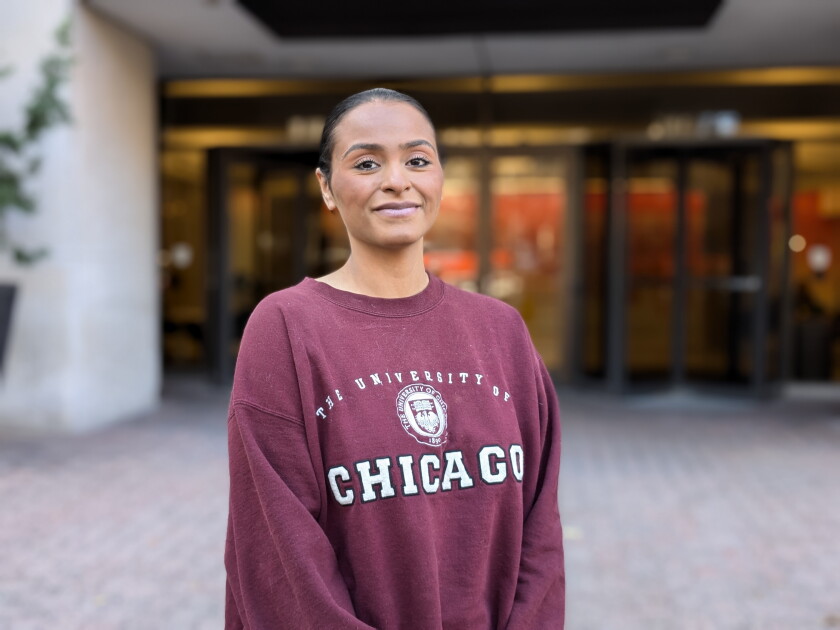
Davis said she was excited to start at UChicago because of its prestige as a research institution, and because she was passionate about her faculty adviser’s research. But her transition to the university was hard.
Davis came from a historically Black college, where she was one of many Black women. At UChicago, she was often the only Black woman — or even Black student — in the room. She felt both exposed and invisible.
“Nobody really cared about what I said or my intellectual contributions or research contributions,” Davis said. “But at the same time, I was hypervisible and subject to extreme criticism compared to everyone else.”
Her struggles were most intense in her relationship with her faculty adviser, the person who was supposed to guide her research and help her succeed. Instead, Davis said, he singled her out for menial tasks that he did not assign to her non-Black labmates, like moving boxes on the weekends — and made comments implying she was incompetent. He told her, she said, to prepare for when she failed out of the program.
“The way that I dealt with it, for the longest time, was just putting my head down and doing experiments, collecting data, just getting to work, and … my project was really fruitful,” she said. “I collected a lot of data, but it didn’t end up being my saving grace in the end.”
Davis’s faculty adviser did not respond to a request for an interview or for comment. A UChicago spokesperson said the school welcomes students from all backgrounds, but federal privacy law prevents officials from commenting on individual students.
“It was isolating, because nobody else was having the experience that I was having, and so, I was kind of gaslighting myself about it for the longest time,” Davis said. “I realized that it wasn’t just in my head when one of my colleagues pulled me aside and was like, ‘I am shocked by the blatant racism that you experience every single day.’”
Last May, Davis went to her department’s Office for Diversity and Inclusion for help. She said she didn’t want to get her adviser in trouble — she just wanted advice on how to stay resilient. Together, she and an administrator came up with a plan to recruit a couple of supportive faculty members to serve on Davis’ thesis committee as allies.
Davis approached them in the following days and asked them to keep their conversations confidential. But a few days later, she got an email from her faculty adviser, saying he was “deeply saddened” to find out she went to the DEI office.
“I have had the privilege to work with many different minority people in many different settings and my experience has always been very positive with no issues,” he wrote in the email shared with WBEZ. “It never crossed my mind that I would do anything according to skin colors.”
After that, Davis said, her adviser began icing her out. He met with her about her research less and less and, a few months later, severed ties altogether. Davis was kicked out of his lab and put on probation.
“The students aren’t broken,” said Angela Byars-Winston, a professor of psychology at the University of Wisconsin-Madison. “The system is.”
After years of hearing stories like Gianna’s, she said, she came to realize the only way to get more Black and brown students into science, beyond counseling them on an individual basis, required fixing the environments in which they were pursuing PhDs. And that, she said, required fixing faculty.
Faculty advisers hold a student’s future in their hands but rarely get training on how to be a good teacher or mentor, she said, especially to students whose backgrounds are different than their own.
“Many of them have, by no fault of their own, been socialized [to believe] the basic and life sciences [are] objective, free from bias, scientific, rational and above the fray of racism,” said Byars-Winston, who now trains academics across the country on culturally aware mentoring.
In sessions, she said, professors sometimes make comments like, “You deal with the messy stuff. I do science,” and “What does race and gender have to do with pipetting DNA out of a plant?”
The trainings that Byars-Winston and her team developed help faculty understand that the answer is “everything.” Race and gender influence what research questions a scientist asks, she said, and how they view and treat students.
Byars-Winston said faculty need to understand this in order to fully support students like Davis, whose communities have long been shut out of academic institutions in America.
But convincing professors they need mentorship training can be a hard sell.
Some of them have been on the receiving end of toxic advising from old-school faculty, Byars-Winston said, and they assume that’s just the way things are done. Furthermore, researchers have a million and one demands on their time, from hustling for grants to running experiments to getting papers published.
Ultimately, however, mentorship training is in the best interest of professors and universities, Byars-Winston said, because it helps get more students to graduation in less time. Some universities have even started requiring it for faculty advisors.
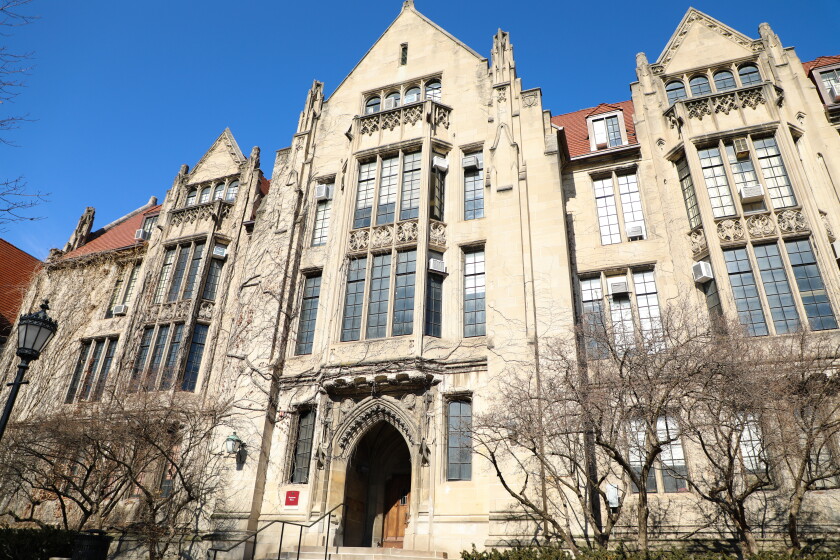
The University of Chicago is not one of them.
Davis has filed a complaint against the school with the U.S. Department of Education’s Office for Civil Rights, alleging her probation was the result of racial discrimination and retaliation.
“There need to be protections in place, because if this has happened to me, then it’s happened to other people,” Davis said. “We work too hard to get here, and nobody should be able to look at me and decide that I don’t belong here.”