

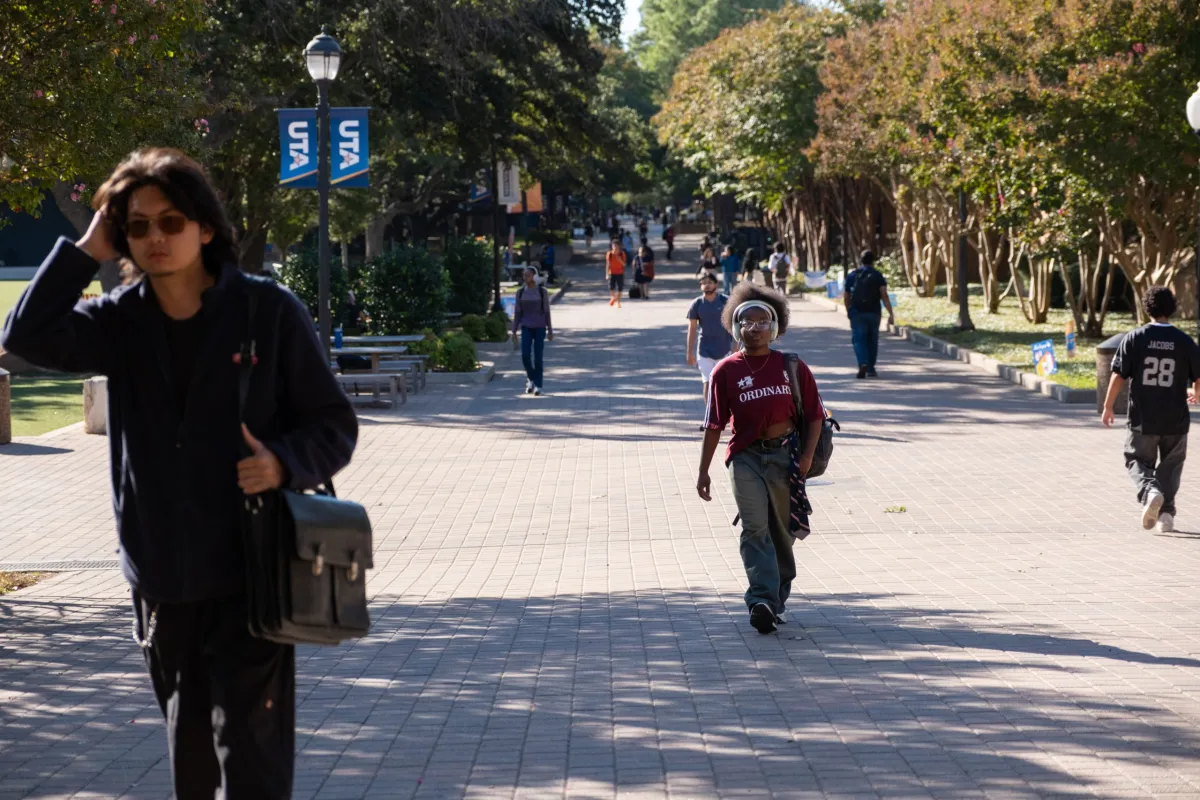
Following a slew of federal and state executive orders affecting higher education, the University of Texas at Arlington has set up a task force to monitor and respond to their impact.
The task force, announced by UTA President Jennifer Cowley in an internal memo, will develop guidance on the changing legal terrain affecting the university and ensure its compliance.
“Although the specifics of implementing these EOs are still unclear, their potential impact could be significant,” Cowley said in an internal communication to the UTA community first reported by the UTA student newspaper The Shorthorn.
In President Donald Trump’s first weeks in office, he has issued a sweeping number of executive orders, including a temporary pause on grant reviews that has been mostly lifted at the National Institutes of Health and National Science Foundation; a ban on diversity, equity and inclusion programs across the federal government; and tossing out a Biden-era executive order supporting Hispanic-serving institutions including UTA. Trump also did away with guidance that says immigration enforcement can’t happen in “sensitive locations” such as college campuses.
Another executive order directed the U.S. Department of Education to guide colleges to “report activities by alien students and staff” that could be considered antisemitic or supportive of terrorism, so that people involved could be investigated and potentially deported. The order has concerned some activists who worry any pro-Palestine protest could fall under that definition. UTA was the site of pro-Palestine protests last year, including the arrest of one instructor.
On the state level, Republican Gov. Greg Abbott issued a ban on certain Chinese social media and artificial intelligence apps from the Chinese government on all state-issued devices. As a Texas public college, UTA falls under that ban.
Last March, during the height of Pro-Palestinian encampments at universities nationwide, Abbott also issued an executive order on antisemitism, calling on universities to review their free speech policies and establish appropriate punishments. There were no similar orders at the time for students of other backgrounds, including Muslim and Arab students.
Many of these orders are being challenged in court, but the changing legal terrain creates uncertainty.
“I am creating a task force, chaired by Chief Legal Officer Shelby Boseman, to track EOs and related agency communications, coordinate with units across campus as applicable, and develop action plans and/or guidance,” Cowley added.
The university has developed a website that houses current guidance on research and will be in touch with principal investigators — or lead researchers — as they receive agency communication. For immigration issues, the university has created a frequently asked questions page and, Cowley said, UTA will follow applicable federal laws and UT System policy.
UTA’s information security office created a memo about restricted technology by the state on government-issued devices, including the app version of the Chinese artificial intelligence company DeepSeek and Chinese-owned social media app RedNote.
The task force comes as universities across the country — both private and public — consider how their existing policies may come into conflict with Trump administration guidance, affecting their eligibility for federal grants and loans.
Cowley ended the email thanking the UTA community for its patience. As the university gains clarity on the impact of each executive order, she said, the university will be transparent about changes to university rules, processes or programs.