

Ohio college leaders are worrying about how many international students will show up on their campuses this fall – and what those absences could mean to institutions’ enrollments and bottom lines.
Prospective students around the globe are paying attention to the first few intense months of the second Trump administration, according to the Association of International Educators, or NAFSA.
The flurry of changes to higher education and immigration policy includes major federal cuts to the country’s research system, which is traditionally a major selling point for prospective applicants. Later, hundreds of student visas were revoked before being reinstated.
And just this week, Politico reported the State Department plans to pause scheduling new student visa interviews in order to take a closer look at applicants’ social media accounts.
These and other changes, particularly around visa issues, moved NAFSA to project a 13% drop in international graduate students this fall, the group’s CEO told Marketplace earlier this month.
The sales pitch amid uncertainty
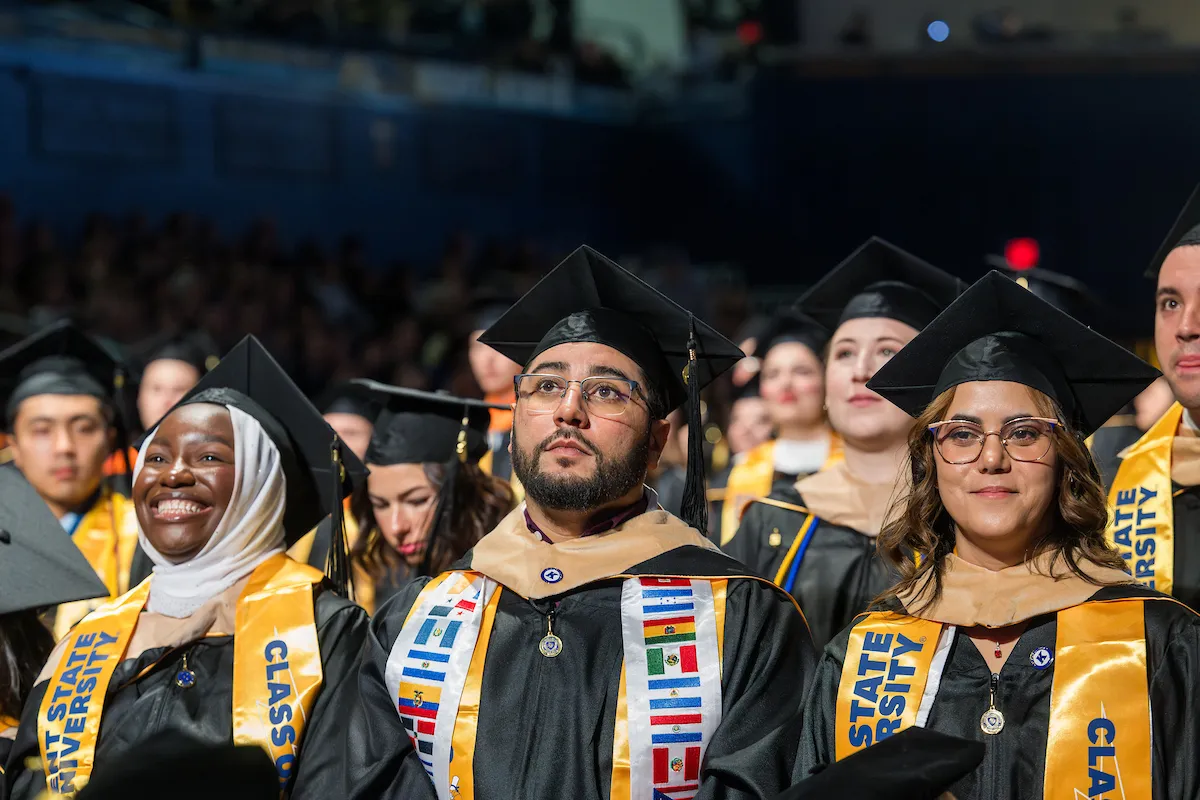
Kent State University officials are forecasting 4% to 5% fewer international graduate students this fall, down from 1,325 in fall 2024.
Marcello Fantoni, Kent State’s vice president of global education, recently traveled to India to talk with prospective students. He told them Kent State is still a welcoming institution – one of the few relevant things he said he can control – and that sometimes the “echo of what is happening in the United States is exaggerated abroad, and that creates unnecessary panic.”
But that sales pitch might not be strong enough. Fantoni said that federal actions over the last few months have influenced how those he spoke with viewed America.
“There is damage done there, and it will take a long time to be fixed,” he said. “A long time.”
About 1.1 million international students attended a U.S. college last year, including 37,000 in Ohio. Most enroll at the post-grad level and pay full tuition. That boost is especially important at campuses struggling with declining domestic enrollment.
In addition to adding to campus cultures, these students also boost state and local economies. Ohio’s international students contributed $1.3 billion to the state’s economy in 2023, according to NAFSA.

Potential visa delays could threaten international student enrollment
Cleveland State University is already anticipating nearly 600 fewer international students at both the undergraduate and graduate levels this fall. It could end up costing the institution $11.5 million in tuition revenue, Crain’s Cleveland Business reported earlier this month.
But that number and those at other universities could fall even further if students can’t get visas.
Though most international graduate students wanting to enroll at a U.S. institution this fall have already applied and been accepted, they still need government approval. That includes securing appointments with U.S. consulates in their home countries, and, ultimately, receiving a visa. It’s another thing universities have no control over.
“That is the most important factor to really determine how many students will come in the fall,” Fantoni said.
It’s still early. Fantoni’s got his eyes on June, though. He said that’s when he expects to learn more about how many students are getting visas in order to arrive before the fall semester.
In the meantime, Kent State staffers are working to retain current international students. They’re sending out more emails and connecting with more people in the office.
Fantoni’s staff used to check a federal database detailing students’ immigration status only occasionally. Now, he said, they check every day to make sure all students are in good standing with the government.