

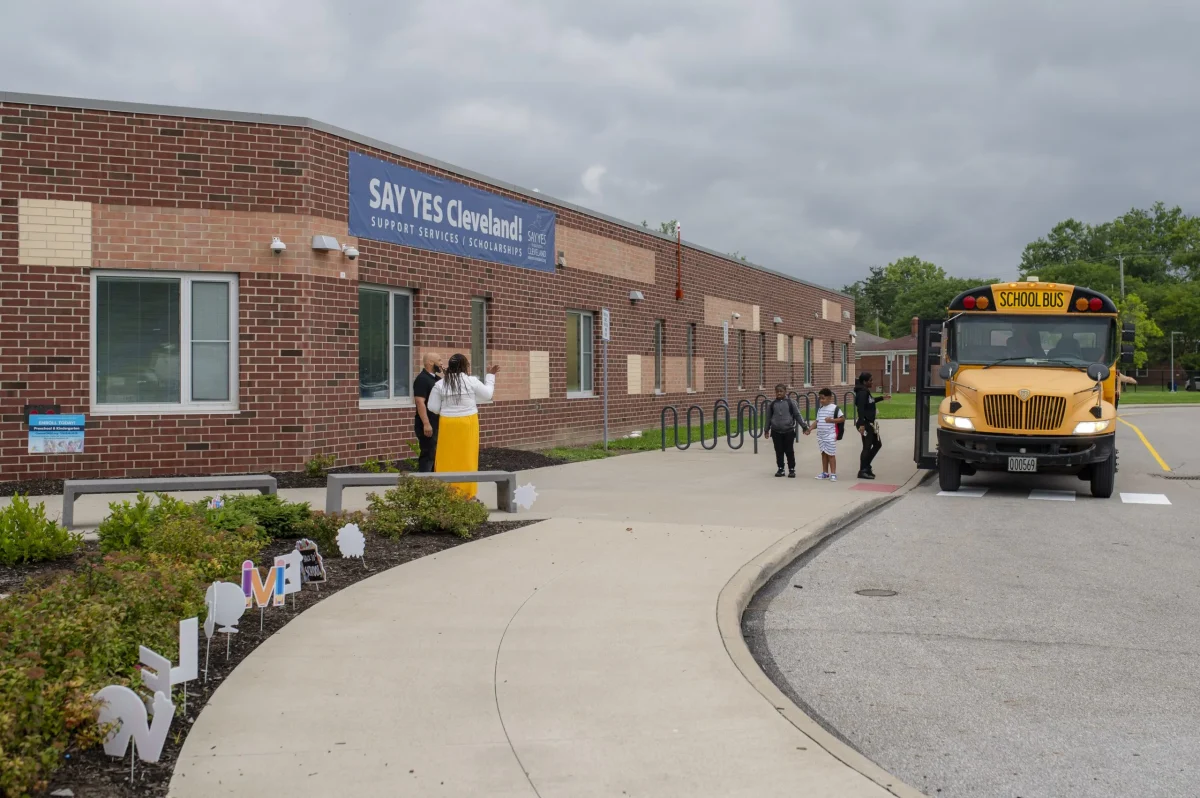
Say Yes Cleveland appears headed for a major restructuring, potentially changing how it operates the free college tuition scholarship program and in-school support services offered for the city’s public school students.
In a recently posted job advertisement for a new executive director, the organization is describing the operations as “two separate but complementary entities.”
[Read more: Six years later, has the Say Yes Cleveland scholarship program lived up to its promise?]
That language is a noticeable difference in how the group has previously presented itself publicly, even though those two sides already operated with separate boards and with different funding streams. A photo shared on the group’s website just this week shows supporters carrying a banner with the group’s logo and “scholarships + support services” written underneath.
The job posting seems to further nod to coming changes, noting the new executive director “will lead the organization as it evolves its governance structure, fundraising capacity, and long-term strategy for impact.”
Say Yes Cleveland, which launched with great fanfare more than six years ago, declined to comment about the job posting or respond to questions about whether it is planning to formally split into two entities.
The organization, which raised more than $100 million for scholarships, also declined last month to discuss details with Signal about how many Cleveland students have earned a post-high school education with the help of a Say Yes scholarship. Leaders said they will share a progress report this fall.
The job posting lists the salary range beginning at $180,000. The former executive director, Diane Downing, was paid $189,000 in 2021, according to the most recently available public tax forms. Interim director Catherine Tkachyk took over this spring after Downing left earlier this year.
Say Yes Cleveland has traveled challenging road since 2019 launch
Since it kicked off in 2019, the organization has faced many challenges, including securing stable, long-term funding for the support employees working directly in Cleveland schools.
Bringing that intense level of help to students and their families – which includes providing mental health assistance and legal aid – was a big part of the philosophy powering the national organization that brought Say Yes to Cleveland.
But the national Say Yes organization, after running several years of deficits, quietly dissolved in 2021, leaving Cleveland’s chapter with no obligations to its parent group and more independence to make changes.
Since 2019, 510 CMSD graduates have earned some type of degree or credential through the program.
For perspective on roughly how many students graduate from the district in a given year, about 1,930 CMSD students earned a diploma during the 2022-23 school year, according to the most available state data. It is unclear, though, how many of those students would meet the Say Yes Cleveland eligibility requirements and therefore be awarded a scholarship.
The Say Yes scholarship is what’s known as a “last-dollar” offering, meaning it only covers outstanding tuition balances after all other state and federal financial aid is applied first.
It is called a “college promise program.” There are more than 200 of those programs in cities across the country, including in Kalamazoo, Michigan, and Pittsburgh (though that program is ending in 2028 due to funding concerns).