
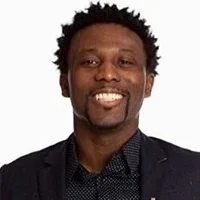
I know firsthand the life-changing power of education. Two decades ago, I was sitting in a prison cell with a 10-year sentence and a bleak future. A reality many of my directly impacted peers are experiencing today. These are human beings trapped in a cycle of poverty to incarceration and back again. But it does not have to be this way. According to a RAND study, those of us who participate in correctional education programs have 43% lower odds of returning to prison.
Today, I am a tenured associate professor at Howard University College of Medicine and the first formerly incarcerated person in the United States to earn tenure at a medical school. My journey from incarceration to academia underscores a simple truth: education is not just a tool for personal transformation, it is a pathway to community restoration. As a national advocate for expanding educational access to incarcerated learners, I am honored to serve as co-chair of the Historically Black Colleges and Universities Higher Education in Prison Initiative alongside the incomparable Dr. Dwaun J. Warmack, president of Claflin University.
Our country faces a higher education-in-prison desert. After Congress banned Pell Grants for incarcerated learners in 1994, college programs in prisons virtually disappeared. More than 700 of these college-in-prison programs shrank to fewer than 10 by the late 1990s. A generation of potential scholars was left behind, locked out of opportunity.
I was one of these potential scholars. While I was incarcerated, I had little access to higher education because of the Pell Grant ban. It wasn’t until after my release that I could truly connect with college opportunities—a second chance that changed the course of my life. That gap is exactly why HBCUs are so critical: supporting students both inside prisons and as they return home ensures education becomes a bridge, not just a fleeting opportunity.
The reinstatement of Pell eligibility through the FAFSA Simplification Act in 2020 was a historic victory. However, funding alone cannot bring us out of the desert. Without colleges willing and prepared to teach behind the walls, the desert remains.
As part of Claflin University’s focus on community development, the HBCU Higher Education in Prison Initiative was born to help address this challenge. Led by a coalition of HBCU presidents, formerly incarcerated scholars, and higher education in prison practitioners, our mission is clear: to address the higher-education-in-prison desert by equipping HBCUs to create and expand high-quality programs for incarcerated students.
My co-chairmanship of the initiative reflects both my lived experience and my policy work. In 2021, I served on the U.S. Department of Education’s negotiated rulemaking subcommittee that crafted the regulations for Pell Grant restoration in prison education programs. That process was as challenging and meticulous as it was meaningful. Every word of regulation we debated would determine whether people behind bars would have real access to opportunity or face unnecessary barriers that perpetuate cycles of incarceration.
In Maryland, I serve on the Prison Education Program Review Committee, where I help evaluate and approve programs seeking to operate in state correctional facilities. The process is long, technical, and often discouraging for institutions unfamiliar with carceral education. It is, quite frankly, hard to become an approved prison education program. That is why initiatives like HBCU Higher Education in Prison are critical. We guide institutions, especially HBCUs, through the complicated landscape of policy, accreditation, and correctional systems so they can deliver the transformative power of education where it is needed most.
HBCUs are uniquely positioned to join other great institutions providing college degrees to students in prison. For generations, HBCUs have served communities most impacted by mass incarceration. Many of the students in our nation’s prisons come from the same neighborhoods that HBCUs have historically nurtured and empowered. When HBCUs step into the prison education space, we are not entering foreign territory. We are extending our mission.
Our president-to-president approach, modeled in South Carolina and now growing across the South, demonstrates what can happen when institutional leaders, community advocates, and directly impacted scholars work together. Our unique leadership structure reflects President Warmack’s belief that people who have lived inside prison must be part of the decision-making. Historically, they have been left out. We are breaking down silos, forming statewide coalitions, and ensuring that the next wave of higher education in prison is collaborative, sustainable, and deeply connected to reentry and community well-being.
We must remember that behind every statistic is a person. Research tells us that 83% of people leaving prison will be arrested again within nine years. Yet access to higher education in prison reduces recidivism, improves employment outcomes, and strengthens families. When we bring college programs behind the walls, we are not just transforming individual lives. We are investing in safer, healthier, and more vibrant communities.
The desert we face is vast, but it is not permanent. The HBCU Higher Education in Prison Initiative and our partner HBCUs are planting the seeds of educational opportunity in the places where hope has been scarce. Our work is arduous, but it is urgent. And for me, it is personal.
If my journey from prison to professor teaches us anything, it is that talent is everywhere, even behind bars, but opportunity is not. Together, we can change that.
Stanley Andrisse is a professor at Howard University and the co-chair of Claflin University’s HBCU Higher Education in Prison Initiative.