

North Carolina is home to more than 100 higher education institutions. They include large research universities, small private liberal arts colleges, HBCUs, single-gender colleges, community colleges, and others.
Some focus on workforce pipeline training, others are attached to enormous healthcare systems, and several promote being a place where students can discover themselves alongside a close-knit academic community.
All the schools face an unprecedented higher education landscape: declines in the number of available traditional college students; shifts in federal support; and rapidly changing advances in technology.
WUNC higher education reporter Brianna Atkinson asked a sampling of chancellors and presidents across the state five big questions about how they are navigating this environment.
This is the first of a multi-part series on the state and future of higher education. All of the stories can be accessed here.
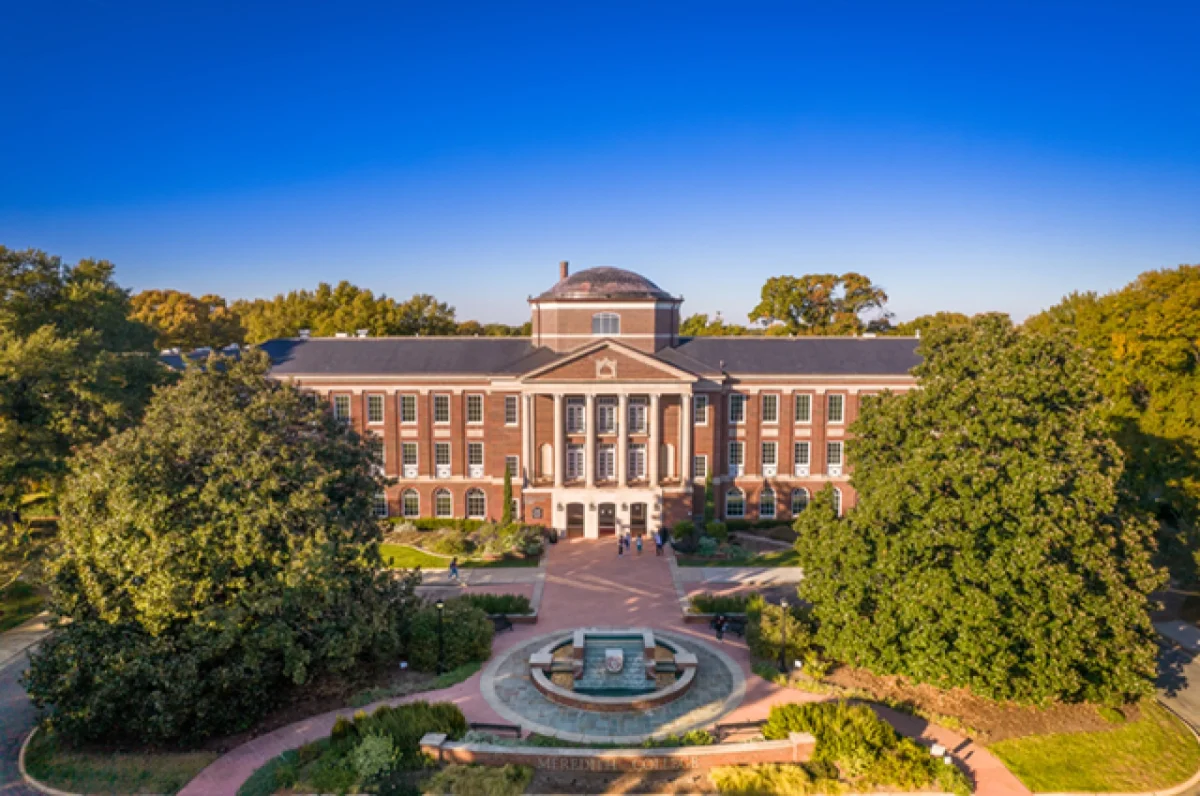
Meredith College is one of three women’s colleges in North Carolina and the only in the Triangle. The Raleigh-area college prides itself on being a close-knit community with a “uniquely personal” education. Average class sizes are about 14 students and over 90% of students participate in real-world “applied learning experiences.” Meredith also considers itself a leader in researching women’s issues. Popular programs include education, interior design, social work, and a dual engineering degree with NC State.
The private college has about 1,600 students, including some men enrolled in its coeducational graduate programs. Its enrollment has grown in the past two years, but not back up to pre-pandemic levels. Meredith has about 200 fewer students since fall 2020. Last year, administrators laid off 6% of its employees as “economic and demographic shifts” caused financial pressures. Around the same time, students led protests against the cuts and poor living conditions.
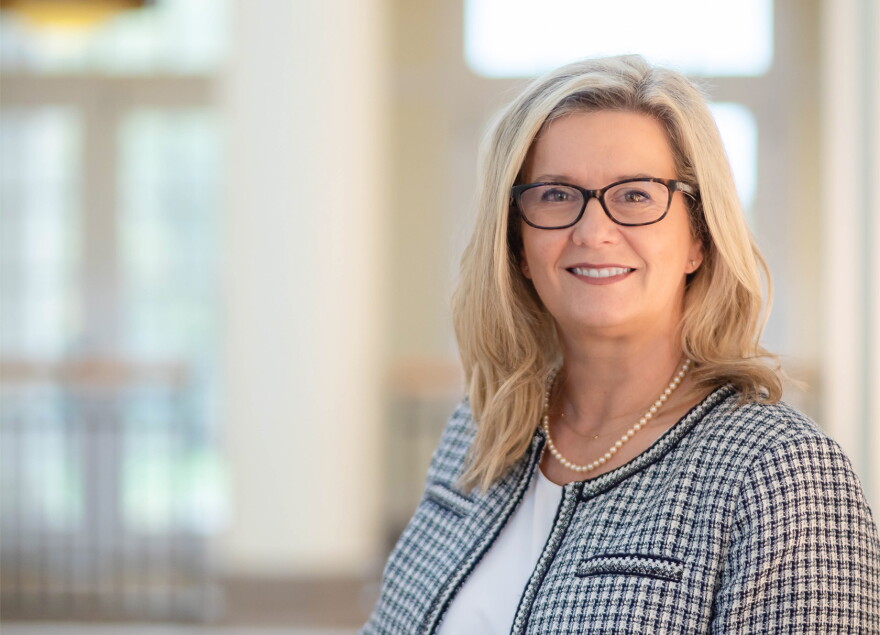
Aimee Sapp began as the Meredith College’s president in July 2024. Sapp is the third woman to assume the role in the college’s 130-year history.
What is one important thing happening in higher education and affecting your institution that no one is talking about?
Everyone talks about enrollment cliffs and financial pressures. What almost no one talks about is the quiet crisis of confidence among young women arriving on campus. College students today are a very academically prepared generation, and yet many arrive carrying a level of anxiety and self-doubt that previous generations did not. The pandemic years, social media, and the pressure to have life figured out at 18 have taken a real toll.
At Meredith, we see it as our job not just to educate women but to build their belief in themselves. That work does not show up in rankings or headlines, but it may be the most important thing we do. When a student leaves here knowing how to lead a meeting, advocate for herself, and take a risk, that changes the trajectory of a life. Higher education leaders need to talk more honestly about this, because degrees alone are not enough anymore.
If you could make one change to how higher education is viewed in this country what would it be?
I would change the idea that college is a transaction rather than a transformation. The national conversation has narrowed to a single question: what will this degree earn me? It is a fair question, and families deserve a good answer. But here is the thing: even on pure return-on-investment terms, the calculation is bigger than a starting salary. The return includes a graduate who can think critically, communicate clearly, adapt when industries change, and lead when the moment calls for it. Employers tell us constantly that these are the capabilities they struggle to find. So I would not ask families to stop thinking about return on investment. I would ask them to count the whole return, because the investment is not only money, and the dividends are not only financial. They compound over a fifty-year career and a whole life.
What is college for?
College is for becoming. It is the one time in life set aside almost entirely for growth, when a young person can test ideas, fail safely, discover unexpected passions, and build the habits of mind that will serve them for fifty years. At a women’s college, I would add that college is also for finding your voice. Women hold every leadership position on this campus. Every lab, every student government seat, every team captain role is held by a woman. They leave here having practiced leadership so many times that it becomes second nature. That is what college is for: not just knowledge, but the confidence and character to use it.
What’s something on your campus that’s giving you hope and how do you envision your institution will look in the next 5-10 years?
Our students give me hope every single day, but one example from our community comes to mind. This past year, as part of our strategic planning process, we hosted a moderated panel of Triangle business leaders on campus, with faculty, staff, students, and board members in the audience, to hear directly what our graduates will need to succeed in the coming decade. What gave me hope was not just what the panelists said, but the fact that our community listened, together, to voices from outside our gates. That openness shaped the strategic plan we are launching this fall.
In five to ten years, I envision a Meredith even more deeply woven into the fabric of the Triangle: our new Center for Entrepreneurial Impact connecting students with the region’s innovators, expanded partnerships across one of the most dynamic economies in the country, and a campus where technology enhances rather than replaces the personal education we are known for. Our enrollment growth over the last two years is a testament to that openness. Families are choosing what we offer, and I am excited to build on that momentum.
You’ve worked your way up the faculty ranks – starting as a department chair, associate dean, and about 12 years as a provost in Missouri – before becoming Meredith’s president. How does having that experience color your decisions as a college leader?
I never forget what it looks like from the classroom. Having been a faculty member, a department chair, and a provost, I came to the presidency with a deep understanding of how a college actually works: how curriculum gets built, how faculty careers develop, how the academic enterprise and the business of the institution have to fit together. Twelve years as a provost taught me that the academic mission is the heart of everything. Budgets, buildings, and strategic plans exist to serve teaching and learning, not the other way around. That ordering shapes every decision I make at Meredith. When I look at a proposal, my first question is always the one I learned to ask as a faculty member: what does this mean for our students and the people who teach them? I hope that never changes, no matter how long I sit in this chair.