

North Carolina is home to more than 100 higher education institutions. They include large research universities, small private liberal arts colleges, HBCUs, single-gender colleges, community colleges, and others.
Some focus on workforce pipeline training, others are attached to enormous healthcare systems, and several promote being a place where students can discover themselves alongside a close-knit academic community.
All the schools face an unprecedented higher education landscape: declines in the number of available traditional college students; shifts in federal support; and rapidly changing advances in technology.
WUNC higher education reporter Brianna Atkinson asked a sampling of chancellors and presidents across the state five big questions about how they are navigating this environment.
This is part two of a multi-part series on the state and future of higher education. All of the stories can be accessed here.
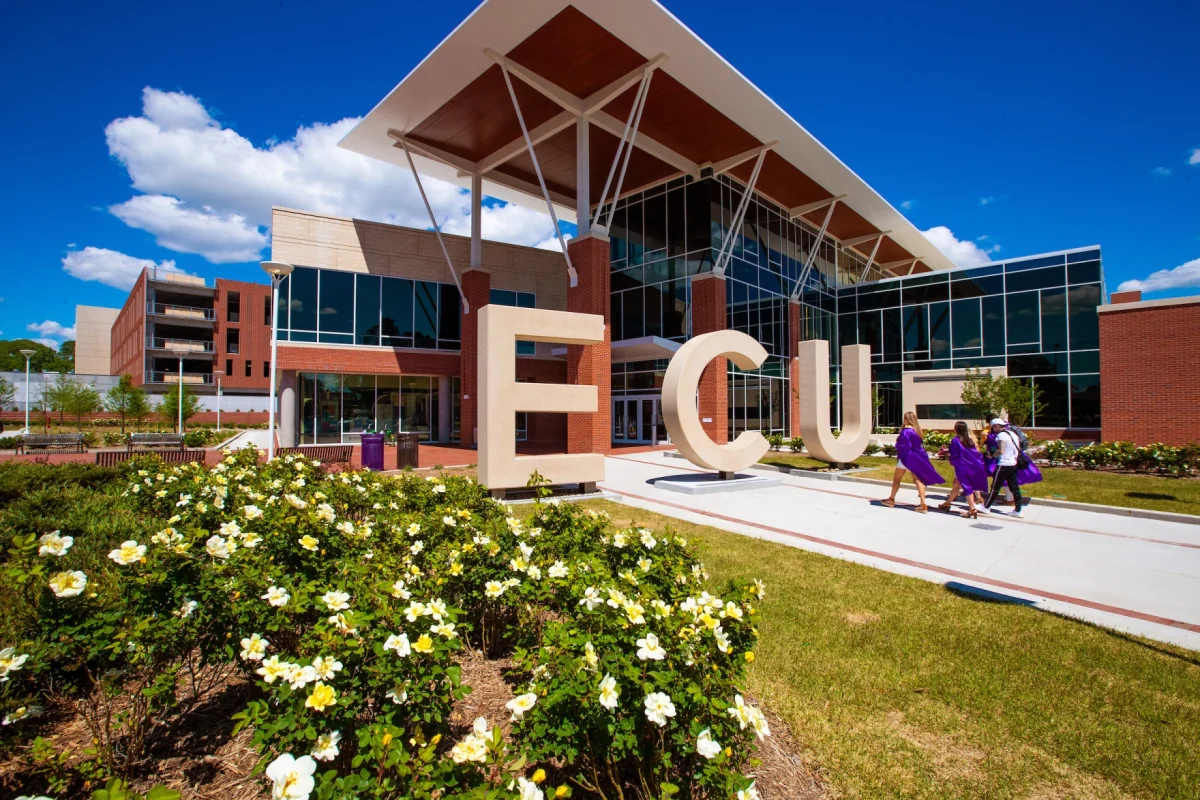
ECU is the fourth largest public university in the state with more than 27,000 students. A large share come from Wake, Pitt, and Mecklenburg counties. The Greenville-area university also includes a medical school, hospital system, and a separate coastal campus along one of the largest estuaries in the United States. ECU prides itself on being a driver of “regional transformation” for rural eastern North Carolina. One of its most popular undergraduate programs is nursing, a high-shortage field in the state.
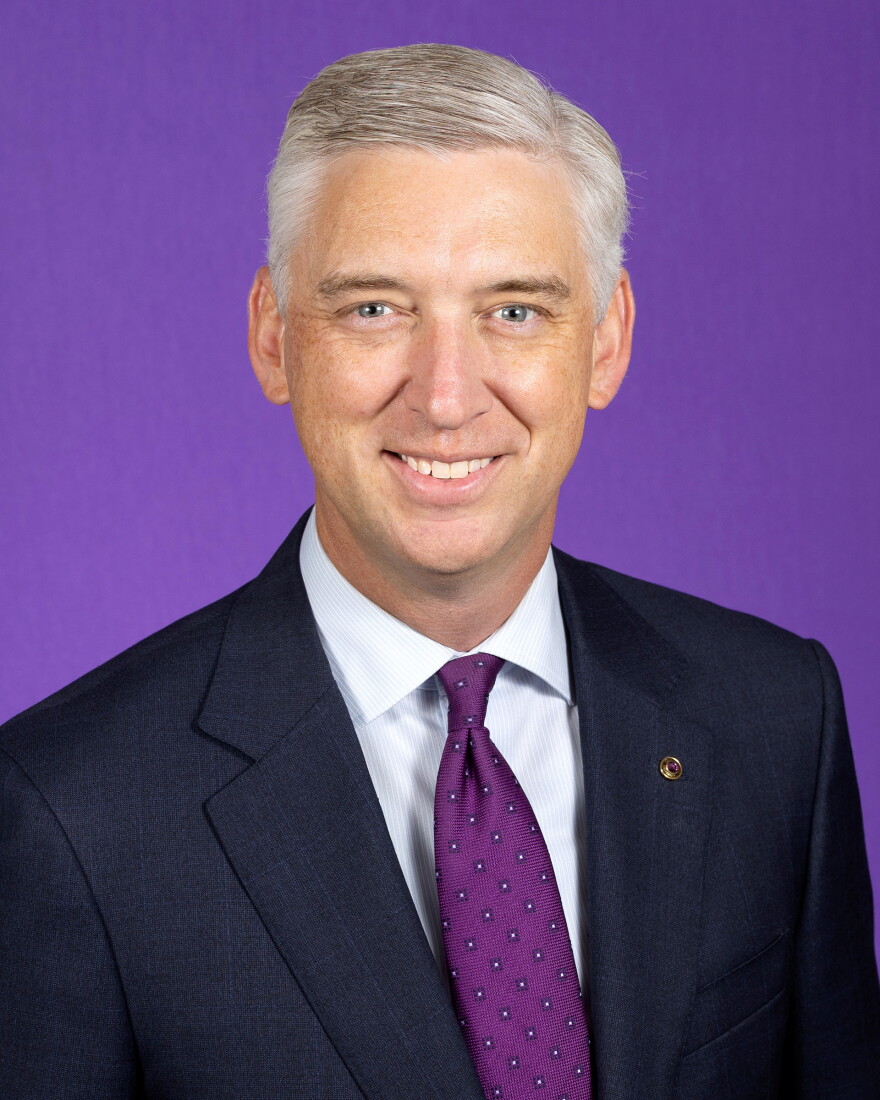
Chancellor Philip Rogers started in the middle of the pandemic, when enrollment was starting to slow at ECU. The university has about 1,600 fewer students compared to 2020. He’s recently been leading a multi-year plan to cut $25 million from the university, including the shuttering of 44 academic degree programs. The decision stemmed from projected declines in traditional college-aged students and increasingly “volatile” federal funding. The UNC System also slashed ECU’s enrollment funding by $6.6 million this year.
What is one important thing happening in higher education and affecting your institution that no one is talking about?
There’s a lot of conversation about tech disruptions, enrollment challenges, and the evolving higher ed policy landscape, but one important issue that deserves more attention is how universities can build the capacity to strategically transform in this fast-paced environment while staying true to their mission. The campuses that will thrive in the future will be those that are disciplined about what they do best, agile in how they deliver it, and bold enough to redesign the institution around student outcomes and public need. At ECU, that is exactly what we are doing. We are optimizing our academic portfolio, expanding experiential learning, using data and technology more strategically, re-imagining our student success ecosystem, and aligning our programs with the workforce and health needs of the state. We will not chase every trend, but we will remain future-focused and unapologetically committed to student success, public service, and regional transformation.
If you could make one change to how higher education is viewed in this country what would it be?
Campuses must continue to demonstrate our public value in meaningful and tangible ways. As we pursue our mission at ECU, we create opportunity for students through affordable and relevant academic offerings that prepare our graduates to pursue their aspirations. We serve communities, strengthen the workforce, improve health, and solve pressing societal challenges. That is public value you can see and measure.
What is college for?
College helps people turn potential into purpose. I still believe in the framing I offered during my installation address: “We welcome students from a wide array of backgrounds … and we provide a life-changing education to all of them. We make it possible for students from all walks of life to build successful careers and become confident citizens and strong contributors to our society.” Student success is not just an empty phrase at ECU. It is central to our DNA and is the driving factor behind our missional work.
What’s something on your campus that’s giving you hope and how do you envision your institution will look in the next 5-10 years?
The energy, passion, and commitment of our people give me hope. Our students are entrepreneurial servant-leaders with the academic preparation to make a difference in the world. Our faculty and staff are redesigning programs, growing the research enterprise, improving the health and well-being of our region, and delivering a strong return on investment to the people we serve. Our alumni and community partners are our greatest ambassadors. In the next 5–10 years, I see our team positioning ECU to be a state and national leader in student outcomes, rural health care, community-engaged research, and partnerships that drive economic value. We will be bold and mission-driven.
Before being named ECU’s chancellor five years ago, your expertise was in education policy analytics. Why shift to university leadership?
University leadership has been part of my professional life since I began my career at ECU as a policy analyst – and it continued through my most recent post as Senior Vice President at the American Council on Education. My previous policy work taught me the importance of leveraging data to make better informed decisions and drive positive outcomes. In my role as chancellor, I now have the opportunity to turn the effective use of data into action at scale. I returned home to ECU because it changed my life growing up in this community. ECU sits at the intersection of access, service, and impact. University leadership allows me to engage in this space and ensure our work touches classrooms, clinics, businesses, local communities, and various other stakeholders all across North Carolina. It is a privilege to leverage my background in higher education policy to make meaningful change as a leader on the ground at one of our state’s highest value universities.