Kyle Sudol and Cameron Steele unloaded their bags from the trunk as the sun set.
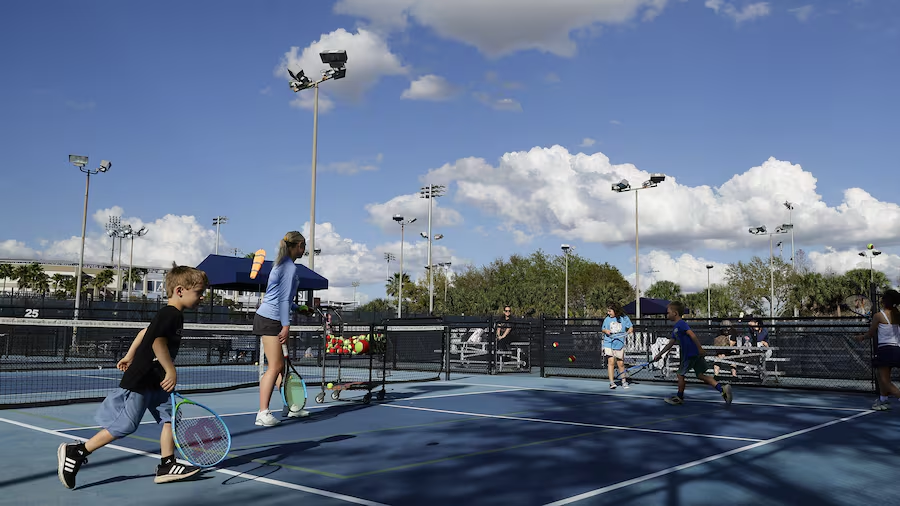
It was Monday, which for them meant open-play pickleball at Hillsborough College’s Tejas Pradip Patel Tennis Center. They’ve been going twice a week after work since November.
Parents ushered their kids out the doors, and young women with tight swinging ponytails walked in. On a court, men in T-shirts and basketball shorts knocked a ball back and forth.
“These two hours that we get after work are probably the part of the day that I look forward to the most,” Steele said.
The tennis center sitson the Dale Mabry campus, the potential site of a Tampa Bay Rays stadium. The college signed a non-binding agreement with the team last month to redevelop the college’s campus and build a stadium and mixed-use district. Hillsborough College wouldlease most of the land to the Rays but retain ownership of the new college buildings.
For decades, the tennis center has hosted tournaments, the college’s teams, local leagues and community walk-ins who play at the site’s 15 pickleball courts and more than 20 tennis courts. The center offers hard courts and the most clay courts at one site in Tampa.
It is one of the most vibrant for adult league play in Florida, said Laura Bowen, the executive director of United States Tennis Association’s Florida chapter.
“It’s more than just a college campus with tennis courts,” she said. “It has a much bigger meaning than that, and it is very important to the community as a whole.”
At a community forum Tuesday night, Hillsborough College President Ken Atwater said that the center would be moved to Al Lopez Park. On Wednesday, however, a college spokesperson said that no final decisions have been made.
It’s unclear how a plan to move the tennis complex to the public park would unfold and if the center’s ownership will change.
The college and the team have four months to forge a final agreement, and Rays CEO Ken Babby said that construction on a stadium project could start at the end of this year.
“We’re committed to make sure that those courts will be better than they are now,” Babby said.
Why people show up to play
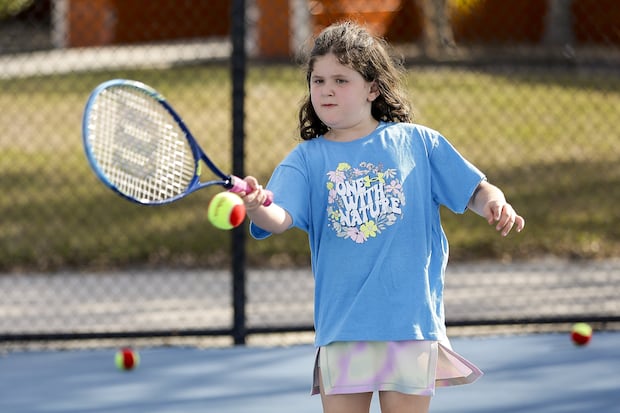
Hillsborough College built four tennis courts on its Dale Mabry campus in the early 1970s.
The city of Tampa expanded the operation in 1989 by adding 12 new courts and a clubhouse. The then-28 court center was the largest in the city.
For the next two decades, Tampa leased it from the college for $1 a year. Many local players thought it would close in the late 2000s after the city slashed its budget, including funding for the center. But a local developer briefly kept it open, and the college eventually took over operations.
Now, students work the front desk, and the center’s manager, Chris Nyholm, also coaches the school’s women’s tennis team. In May, the team won a national championship — their third ever and the second in the last three years.
In 2021, the center was one of 25 across the country to win an Outstanding Facility Award from the United States Tennis Association. After hurricanes Helene and Milton, the Florida chapter gave the center a grant to help repair and renovate the damaged courts, Bowen said.
Access to public play is vital to the health and wellness of the community, she said.
“People want to know that on a weekend, they can go walk into a public park with a friend and they can play,” she said. “And for this one to be on a college campus actually is kind of magical in that way too, because you don’t always get that.”
While other tennis clubs shift to more expensive social lounge models, pickleball player Sylvia Sanchez said playing at the Hillsborough College center is inexpensive. It’s maintained nicely too, she said.
“I like the way that they’ve kept it affordable for members,” Sanchez said.
Sudol said he pays around $10 to play pickleball for three hours, whileother places in the area charge close to $17 per hour plus court rental fees. He sometimes plays at public parks, but that can sometimes mean an hour wait for a court to open.
The location is a plus, too, Tampa resident Dong Li said as she pulled on her sneakers before a match. She said it’s especially convenient because many people on her team live in Pinellas County. Steele works on the other side of the airport, so he said it’s an easy drive even with Tampa rush hour traffic.
The center attracts people of all ages. On a windy night a few weeks ago, Sudol and Steele played against two older men they’d never met before for two hours straight.
Marilyn Coffey, who plays pickleball with a group of friends twice a week, loves that the complex is outdoors, even when it’s hot and rainy in the summers. The students that work the front desk always remember your name, she said.
If the stadium project disrupts the center’s operations, though, Coffey said her pickleball group might disperse.
“Depending on where they put it, we might find ourselves in a new spot,” she said.
What could happen to the center?
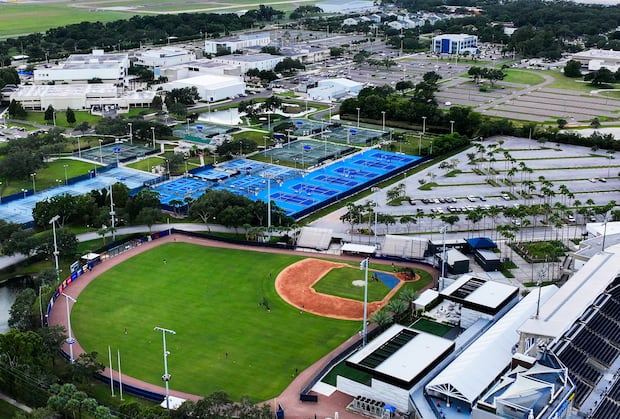
On Feb. 24, Gov. Ron DeSantis and the Florida Cabinet granted the college 22 acres of nearby land to use for the project.
In the same meeting, they also removed a deed restriction that required the tennis center’s property to be used for college purposes only. This means the current tennis center’s land is up for grabs to use for the stadium project.
“If a project were to move forward, the goal would be ensure continued access to recreational opportunities through thoughtful planning and collaboration,” Angela Eveillard, the college’s spokesperson, said.
Al Lopez Park is less than a mile from the Dale Mabry campus, so the complex’s relative location in the city would not change much. But the college would need to coordinate with and get approval from the city of Tampa to plan the center’s relocation.
Bowen said retaining a center would be a good investment because the Hillsborough County market is huge and there’s already a built-in vibrant community.
The United States Tennis Association is available to help the college decide what do do with the center when the time comes, Bowen said.
While Coffey thinks it makes sense to build the Rays’ new stadium at Hillsborough College, she’s worried that the current tennis center won’t be maintained until it’s rebuilt or moved.
“I do hope they move it somewhere that is close, that is public.” she said. “They have a championship tennis team. They have to go somewhere! I feel like they will accommodate that.”