

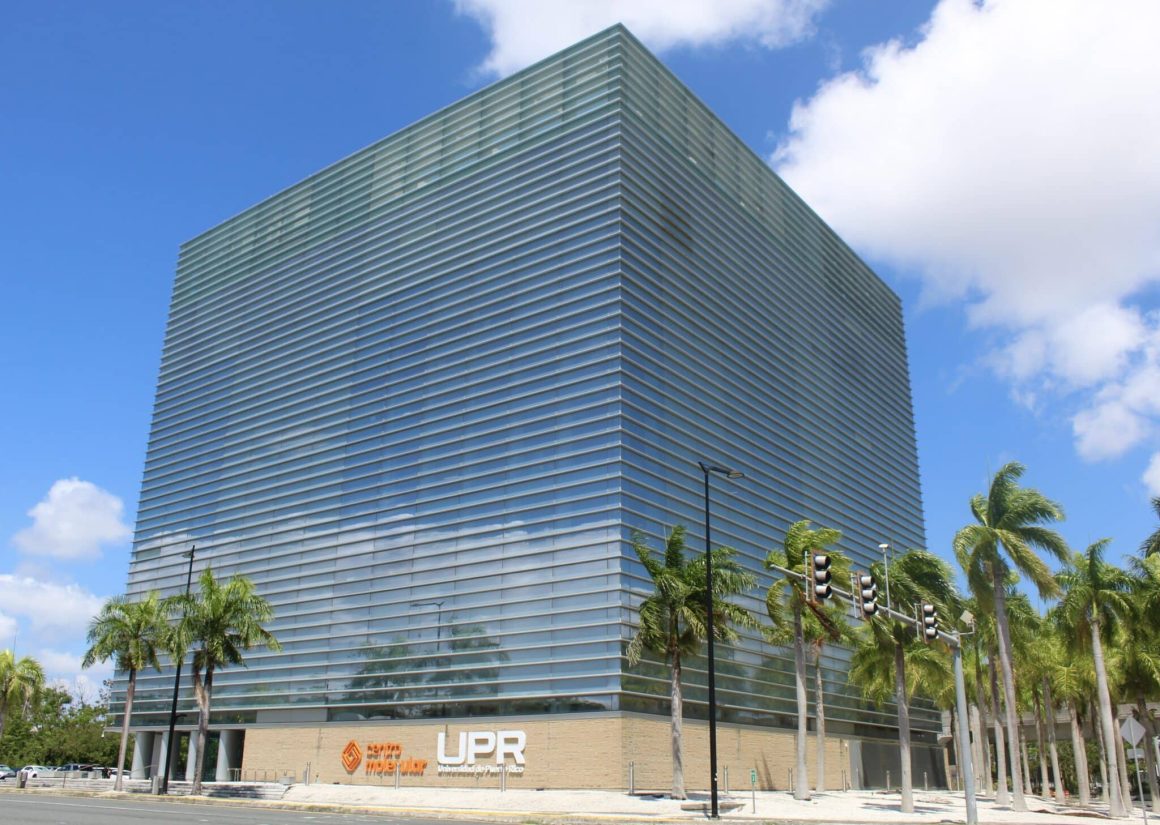
A deadlock in negotiations between the University of Puerto Rico’s Molecular Sciences Research Center and UPR President Zayira Jordán Conde has put the center’s operations in jeopardy after a financial arrangement that had guaranteed $8.5 million to the corporation over six years through recurring support expired on June 30, 2025.
The Molecular Sciences Research Center is a nonprofit corporation affiliated with UPR. Construction of its building began in 2004, and in 2010 it was designated as an outside entity to shield it from the university system’s governance.
The arrangement expired as Jordán Conde arrived as president of the institution last July. Morethan 10 months have passed without a new pact that would allow the transfer of at least $2 million in funds that, under a certification by the UPR Governing Board, should have been allocated to the Molecular Center for the current fiscal year.
“The funds have not been processed because there is no agreement. The university cannot make fund transfers if there is no signed agreement,” the UPR’s president said during the Governing Board’s regular meeting on April 30, in response to questions from faculty representative Rafael Méndez Tejeda, who has raised the issue at the governing body’s past three meetings.
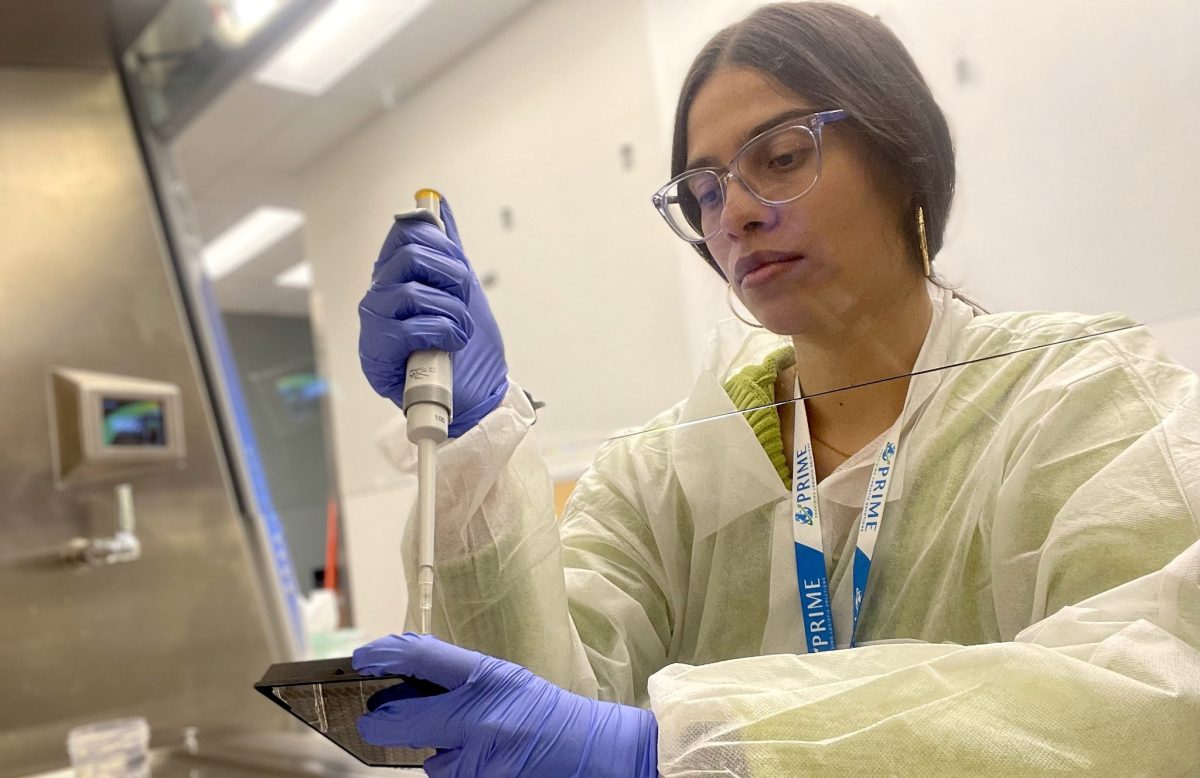
According to Molecular Center Director Eduardo Nicolau, without the transfer of at least $1 million before May 15, the center will be “forced” to halt infrastructure improvement projects at its Río Piedras building in Río Piedras and postpone essential purchases, including nitrogen, and dry ice, andamong other materials required for research conducted there by about 42 scientists and 225 students.
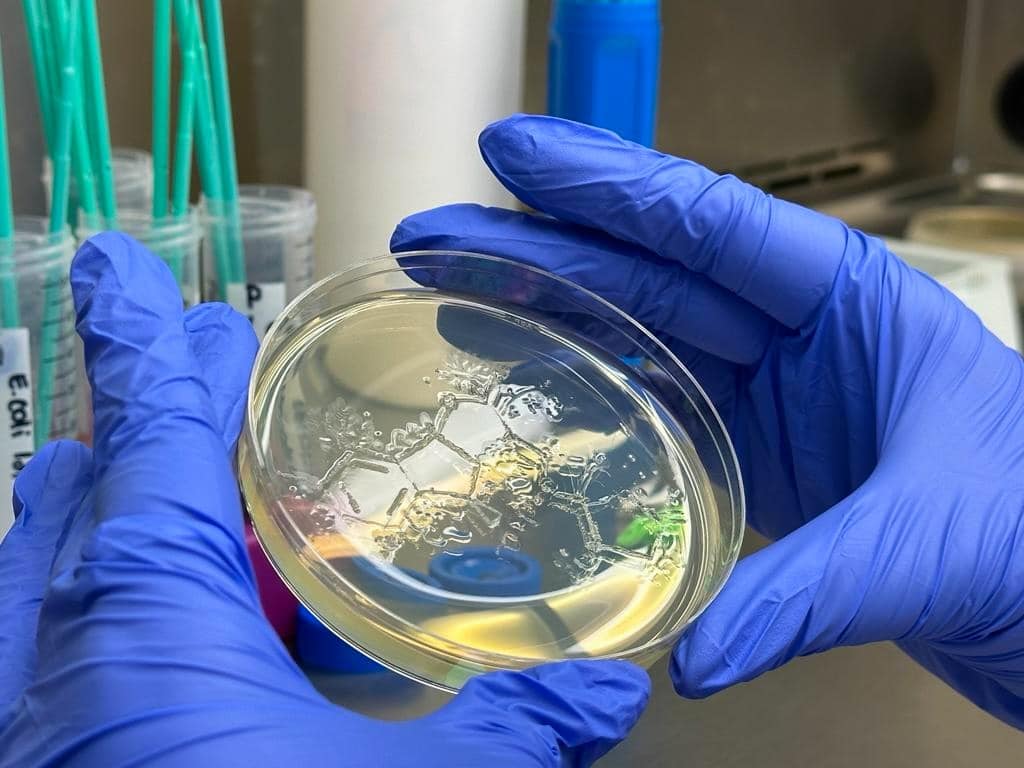
The center is currently conducting studies on neurodegenerative diseases such as Alzheimer’s and Parkinson’s, cancer and the development of new materials, including lithium batteries and water purification technologies, Nicolau said.
“If by May 15 I don’t have certainty about how I’m going to finish the year operating, then I have to make decisions — perhaps limiting the purchase of some things we had planned and leaving some projects for later, let’s say infrastructure improvements, maintenance and other planned work,” Nicolau told the Centro de Periodismo Investigativo (CPI).
For her part, the UPR president told the Governing Board that “Dr. Nicolau has had the opportunity on repeated occasions to approve a memorandum of understanding,” but the parties have not yet reached a final agreement.
Jordán Conde did not respond to CPI’s request for an interview.
What Is Behind the Deadlock?
It was not until February that the UPR president sent the Molecular Center a memorandum of understanding (MOU) to revive the funding arrangement, seven months after it expired and after Jordán Conde arrived at the university.
However, Nicolau told CPI that he has not signed the MOU on the recommendation of his legal adviser, attorney Anabel Torres Colberg, because the document includes language from a “loyalty clause” that, according to the Molecular Center director, could jeopardize the compliance required to maintain its tax-exempt status under section 501(c)(3) of the Internal Revenue Service, which recognizes the Molecular Center as a nonprofit organization.
In his view, the language in the clause that the current president’s office wants to include would subordinate the organization to the vision of the administration in power. That, Nicolau said, conflicts with IRS provisions for nonprofit entities, which are required to avoid partisan political alignment.
“It is a requirement of the federal government that we have independence and not be subordinate to anyone [to maintain that tax exemption],” Nicolau said.
The director also said the proposed MOU does not include retroactive payment for the months the center has operated without an agreement. In addition, although the new proposal would extend for another five years, “it only details the allocation for the current year and does not directly establish the amounts that would be granted in subsequent years.”
Since the agreement expired, the Molecular Center has been operating at a deficit. It costs about $2 million a year to operate, while its own revenue this year reached only $700,000. It has been able to supplement operations only in part with $3 million in funds the Department of Economic Development and Commerce granted in 2022, Nicolau said, to attract new researchers, create two areas for new treatments and establish an operation for cell and gene therapy research. The funds were supplemented with an additional $3 million in federal money from the American Rescue Plan Act.
The corporation’s director explained that the Center is responsible for purchasing supplies, paying the salaries of 16 administrative staff members, and covering maintenance and water services. Meanwhile, the Medical Sciences and Río Piedras campuses are responsible for the scientists’ salaries. Compensation for undergraduate and graduate students is funded by external grants and the federal government. The UPR’s Central Administration covers the building’s electricity costs.
Of the money the Molecular Center receives from the UPR, it must transfer $150,000 back to the university’s Central Administration each year to cover security expenses, the researcher said.
President’s Office: They ‘Set the Agreement Aside’
To address the situation while negotiations remain stalled, the Molecular Center director proposed a temporary agreement to the UPR president’s office that would allow $1 million to be advanced to close out the fiscal year. However, the university administration did not receive the proposal well, according to remarks by Ilka Ríos, vice president for academic affairs and research, during the UPR Governing Board’s regular meeting Thursday, April 30.
Ríos, who said at the meeting that she is negotiating the agreement on behalf of the UPR president, added that she participated in a meeting with Nicolau on Wednesday, April 29, where she expected an agreement would be reached to make the transfer of funds possible. However, the process did not move forward.
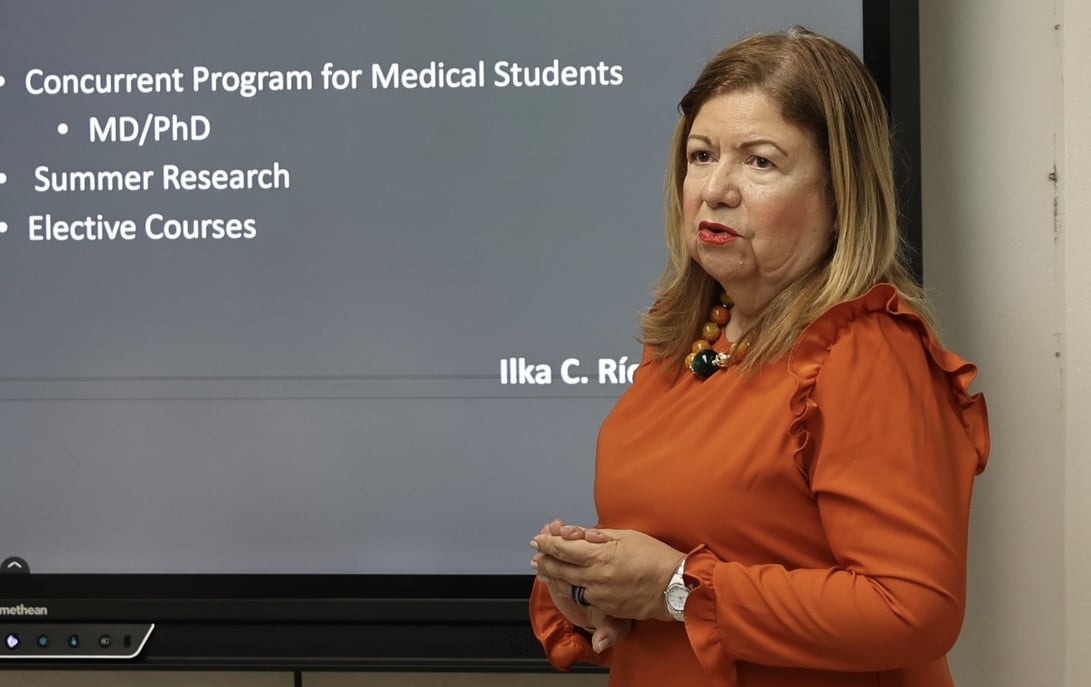
“When he arrived at the meeting, [Nicolau] came with an interim agreement that had nothing to do with the agreement that had already been reviewed here and to which the clauses had been added,” said Ríos, who expressed surprise that attorney Torres Colberg attended the meeting.
According to Ríos, the university administration is interested in facilitating the disbursement of funds already included in the fiscal year 2026 budget, but she stressed that any pact must comply with regulations.
“No one wants the agreement signed more than the president and I do; no one wants more than we do to be able to send them the money included in the budget certification for this fiscal year 2026,” she said. “[But] every agreement must have mandatory clauses, because when we talk about the university, we are subject to the comptroller’s regulations,” she added.
She said the previous arrangement called for phased disbursements, while the Molecular Center’s new proposal maintains a fixed $2 million annual contribution.
The official said: “We understand that with a corporation, as is also the case with the [UPR] Hospital [in Carolina] … it goes through a stage where it needs a lot of help from the university, but that corporation is supposed to move from crawling to walking.”
Nicolau rejected that interpretation and argued that although the center generates its own revenue, its operating model cannot be separated from its role within the university.
“We do generate income because we have agreements with private-sector companies. But I cannot separate that from the fact that we also provide services to the university. I cannot cover everything with the income we bring in privately and provide free services to the university, because then I am basically financing one operation with another,” he said.
He said a large share of operating costs is tied to the support the center provides to the UPR academic community that uses its facilities. “There are 42 researchers there from the Medical Sciences and Río Piedras campuses, and everything that has to do with maintaining the building so they can operate and carry out their projects, as well as all the personnel who keep the building running, is part of what we must pay for,” he said.
For her part, President Jordán Conde said during the board meeting that the Molecular Center’s business model must be reviewed to incorporate fees for the use of its facilities.
“I had a conversation with Dr. Nicolau in which we discussed Molecular’s business model, the fact that they have never billed for the space provided for research charged to the indirect costs of the projects carried out there, and we agreed that work would be done on that,” she said.
UPR Governing Board Chair Ricardo Dalmau urged the parties during the meeting to move quickly, given the center’s urgent need. “It is clear that for the fund transfer mechanism, there has to be an MOU; however, it is important to see how we can speed that up because they need those funds,” he said. President Jordán Conde nodded during the discussion.
The Molecular Center was created in 2004 as part of the UPR’s Permanent Improvements Plan from 2000 to 2005, funded by the National Institutes of Health.
Before its inauguration, the UPR’s then-Board of Trustees decided in 2010 that it would be administered through a university corporation — called Molecular Science Building, or MSB — to give it greater operational autonomy, under a model similar to that of the UPR Dr. Federico Trilla Hospital in Carolina.
In 2021, the UPR Governing Board amended the corporation’s bylaws, incorporating into its purposes the promotion of scientific research, the generation of knowledge and the development of an academic community in the sciences, beyond its original function of administering and operating the building, without imposing an obligation of financial self-sufficiency.
Scientists Join the Call for Action
Amid the situation, 29 UPR researchers sent a letter on May 1 to the university president and the Governing Board expressing concern over conditions that, they warned, directly threaten the center’s operations, its long-term sustainability and the institution’s ability to remain competitive in securing external research funds.
The group of scientists warned that, “for the first time since its establishment in 2011, the center faces a financial situation that threatens its continued operations.”
Some of the research conducted at the Molecular Center is funded by federal agencies such as NIH, the National Science Foundation, the Department of Defense and NASA.
“What is at stake is not only the operation of a research center, but Puerto Rico’s capacity to sustain its scientific, educational and economic development,” the group of researchers said in written remarks.
This story was made possible through a collaboration between the Centro de Periodismo Investigativo and Open Campus.
This translation was generated with the assistance of AI and reviewed by our editorial team to ensure accuracy and clarity.