


Groups that focus on helping college students and working adults build networks are expanding their models amid growing interest, including from colleges and employers.
Workforce
Covering higher education in the 2020s means also covering the alternative pathways and credentials that are rapidly emerging.
Also see Work Shift, our project dedicated to reporting and opinion on the intersection of education and work.

Posted inThe Job
Working toward a degree while working
Staffing shortages in healthcare could make stackable credentials real.
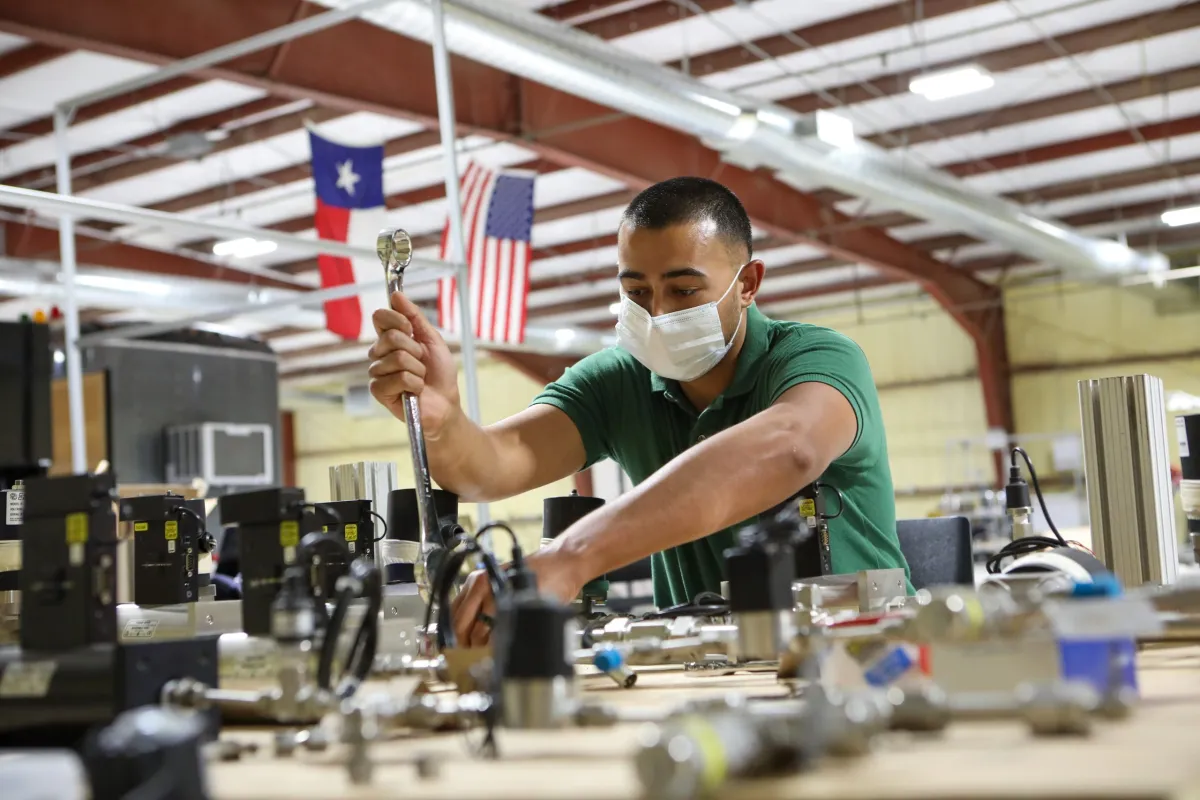
Posted inEl Paso
With $40 million grant, ‘American manufacturing will be reborn in El Paso’

The award is part of the Biden administration’s $1 billion Build Back Better Regional Challenge.

Posted inThe Job
Tapping ‘underestimated talent’
Bitwise Industries, in Fresno, has prepared more than 10K students for tech jobs with accelerated training and paid apprenticeships. It’s expanding to nine more cities.

Posted inThe Job
Could one-year apprenticeships become a thing in tech?
The hot labor market drove a 41% increase last year in registered apprenticeship programs in tech fields.

Posted inThe Job
Working your way up
Healthcare companies are getting more creative about recruiting and retaining workers without bachelor’s degrees — including by covering costs for degrees, certificates, and certifications to offer upward mobility for employees who want to advance in their careers.

Posted inThe Job
A hands-on industry gets creative to attract talent
Community colleges are at the center of a campaign to get more students interested in optics manufacturing.

Posted inThe Job
Where bootcamps are free
For short-term credentials to have the best chance of paying off for students, an emerging view holds that they need to be heavily subsidized—with funding from employers or foundations if government support isn’t there—while offering connections to actual living-wage jobs.

Posted inThe Job
A ‘rigged’ economy and skepticism about college
Americans view college as expensive and time-consuming and believe the economy is fundamentally unfair, new research found.

Posted inPittsburgh
The complicated reality of a healthcare career in Pittsburgh

Health and medicine have become pillars of the Pittsburgh economy, but training programs are struggling to attract students in fields with poor job satisfaction.